After setting the working group let us prepare and undertake the thematic consultations. We also document and extract outputs and outcomes from them in terms of visions and land use interaction matrix with an example. This chapter is part of a series on Hierarchical Spatial Planning Framework
We are nearing completion of month 18 now. It has been three months since we are sensitising every stakeholder department on their role and ownership for the policy. Fortunately, they all agree and are on board. Hopefully, we also have a formal government notification circulated to at core as well as extended working group members.
In short, we have already set up the working group. First battle won.
What next?
Now comes the big challenge.
Now comes the actual consultation process. So how do you approach it?
My suggestion. Take it up theme wise. Be prepared to charter unknown territories.
Preparations for Consultation Workshops
What preparations are required?
Aha… long list… let us focus on a few especially important ones.
Take it up in phases as per themes. Ensure that each theme consultation workshop is preceded by a core group meeting for arriving at a common platform for the actual discussions on during thematic consultation workshops. Share presentations and discussion points with each other to ensure that the core group members and academic experts and technical team speak coherently.
Also ensure that there is short meeting with core group members after the thematic consultation workshop to discuss and finalise way forward.
1. Objective
It is especially important to ensure that we are clear about the objective of each consultation. We took up each consultation with specific objectives. Following key points guided formulation of the objectives in each case.
- Enlist and sensitise stakeholder departments on issues / concerns and land use conflict resolution in multi-sectoral development approaches
- Formulate vision statements for each sub-themes (long, medium, and short term)
- Build consensus for enhancing the coordination mechanisms with other departments
2. Participants
Identify the sectoral departments and actors that need to be present. It is going to be a large group of people. Presence of any unnecessary sector / actor should not be welcomed. We need to steer the consultation workshops to a conclusive direction.
Try to meet the participants nominated to represent the actors for the consultation workshop. Share tentative questions and broad expectations. Brief them, if possible.
3. Venue, Date and Time
Finalise a venue, date and time in advance. Give them time to come prepared. Preferably arrange a venue outside a regular office set-up, in a conference hall (government or hotel), large board room with presentation facilities, space to move around. The venue should not be cramped for space with depressive lighting. Try to encourage a venue with natural lighting. It is good for lateral thinking and encourages openness to other’s perspectives. Break the monotony of a regular day’s work.
Arrange refreshments. But avoid distractions.
4. Pre-requisites
- Prepare and share a small note (easy to read with graphics and clarity of expectations) regarding the theme and sub-themes selected for discussion.
- Participants should have a general idea of existing coordination mechanisms in their departments and be prepared with the answers to the key questions
- Participants / stakeholder departments should have a general idea / information of spatial strategies pertaining to their departments and key developments in the state
5. Moderation Plan
Have a moderation plan ready and agree on it in the core group meeting. Circulate it in advance to the participants. The moderation plan should clearly indicate the timelines, leading questions, method, moderator and expected outcomes. (Click here to see a sample for the environment theme)
6. Tools
Ensure that the relevant tools and equipment are in place. They might be presentation tools, projectors, screens, flip charts, pin boards, white boards etc. Writing kits for participants, meeting recorders (video, voice, photos etc.)
7. Key Questions
It is important for the technical support team and experts to be prepared with the key questions. The idea is to be exhaustive and but to the point. Extract the key questions from the policy analysis undertaken as part of the baseline assessment. Click here to access a sample list of key questions that may be used with slight modification for most states in India.
8. Expected Outputs
Be prepared to hear weird answers to some of your key questions. Afterall, each actor/stakeholder is there to promote his/her own department. Guide them politely, and diplomatically to elicit the desired answers. In our case, we focussed on two output matrices during each workshop. The two matrices were later converted into contents of the policy document. Tag boards with paper cards were used to development the two matrices during the workshop.
Click here to see the sample format of expected outputs for Environment theme.
Follow up consultations and Documentation
Be prepared to undertake a series of one to one follow-up consultations with each department. It is highly unlikely that they come prepared with answers to all the questions that are being asked. The technical support team would be required to make regular follow-up meetings and discussions to get the necessary information.
This is where the documentation of meetings, discussion and the output of the consultation workshop becomes extremely important.
Record in terms of photo-logs, video logs, audio-logs, record of discussions during the workshop and individual consultations, formal circulation of minutes of meetings, formal collection of documents and acknowledgement of receipt.
Each actor needs to show that they participated and facilitated. We also need to show that efforts were made to collect information. And most importantly, there will be so much of information, it would be difficult to keep a track of it.
Click here and here to see the final formal documentation circulated to each working group member in the two cases. It also comprises of the record of discussion and the list of documents collected during individual consultations.
Congratulations we have now completed one of the most complicated part of the policy formulation process completed two years (Month 24).
Land Use Interaction Matrix
Following are a few images that summarise the outcomes of the Thematic Consultations. (Click on the slide show to select and open the image on display.)
The images essentially describe the targets for each sector / land use for one of the states and its relationship with the other land uses. It indicates the key actions / policy interventions required in other sectors to ensure achievement of designated vision of a sector.
For example. If agriculture is at the centre, then the vision and targets in the inner circle are for agriculture as a sector. The interventions required in other sectors (forests, water, industries etc.) are listed as a sectoral interface. All the sectoral interfaces together will be required to enhance achieve-ability of visions and targets of agriculture.
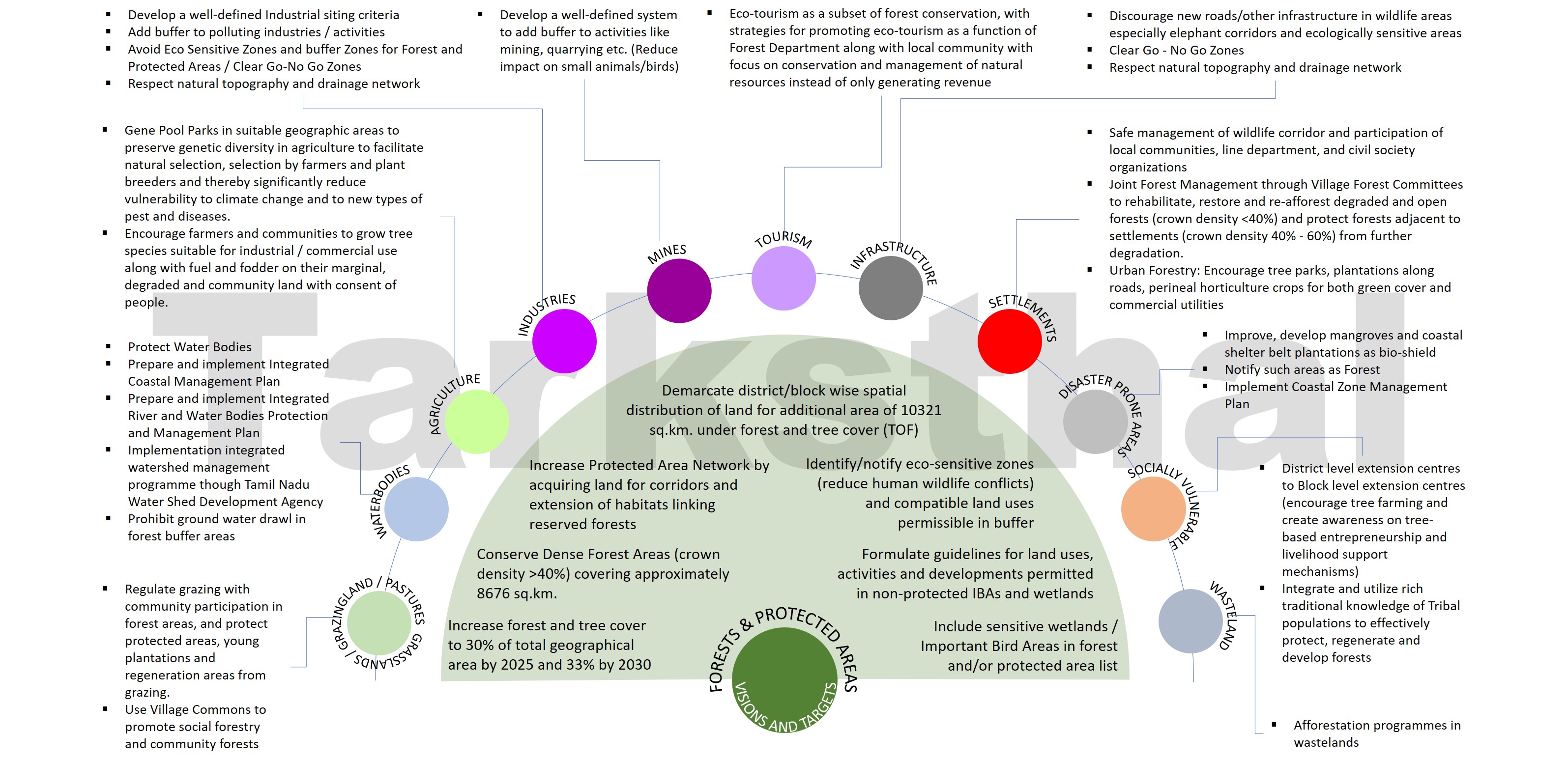
Outcomes of Thematic Consultations – Forests and Protected Areas 
Outcomes of Thematic Consultations – Grasslands, Grazing lands and Pastures 
Outcomes of Thematic Consultations – Waterbodies 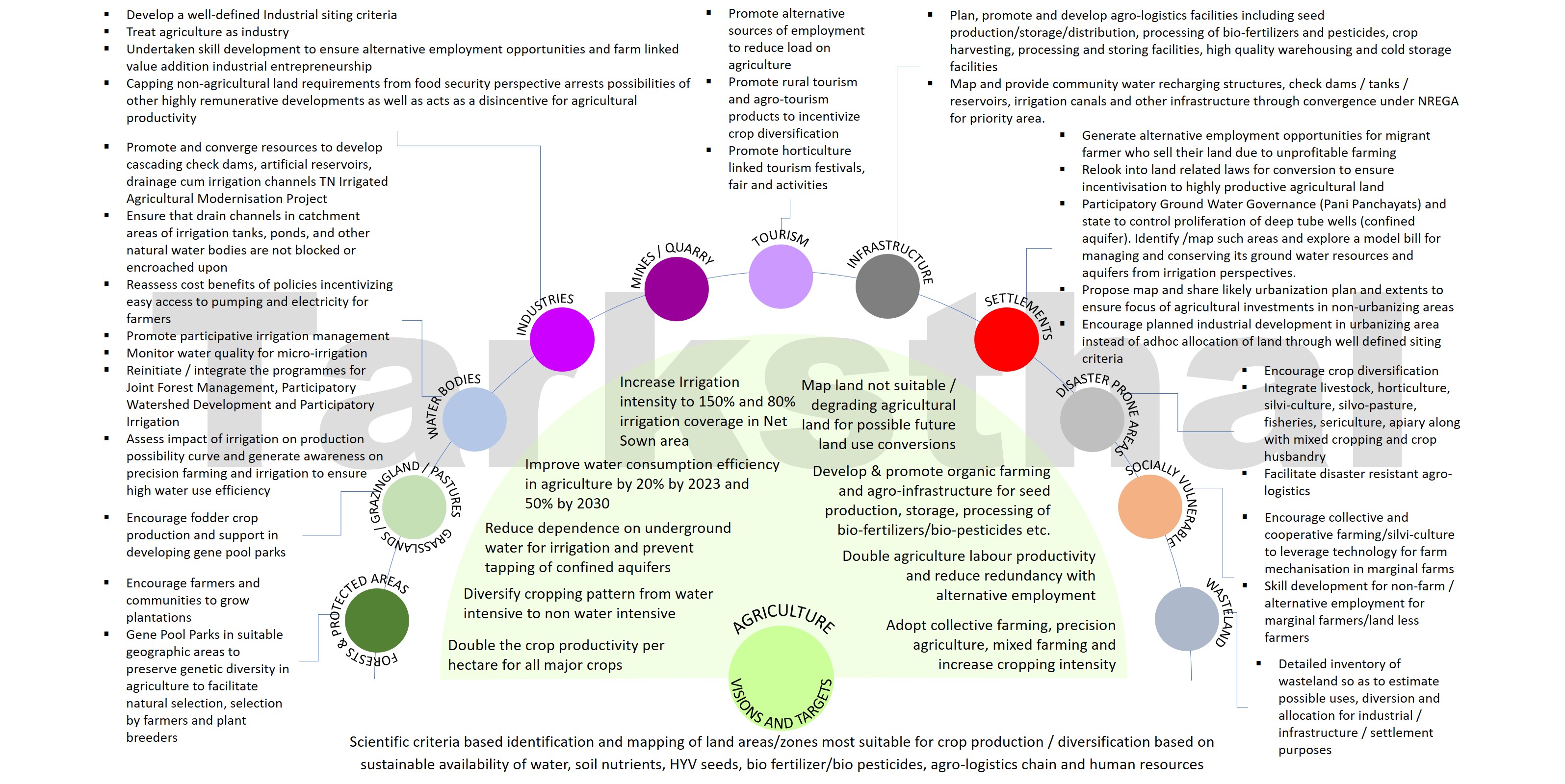
Outcomes of Thematic Consultations – Agriculture 
Outcomes of Thematic Consultations – Industries 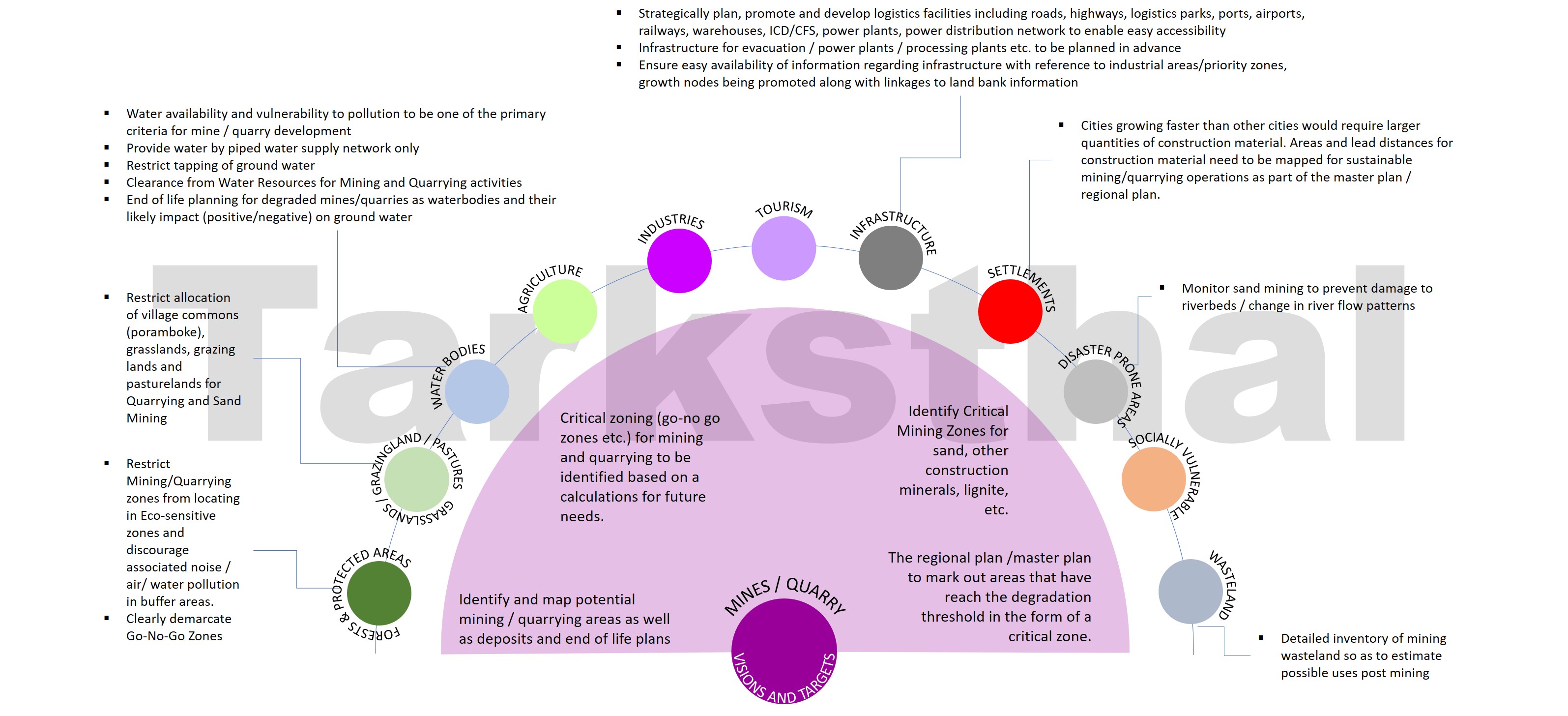
Outcomes of Thematic Consultations – Mines and Quarries 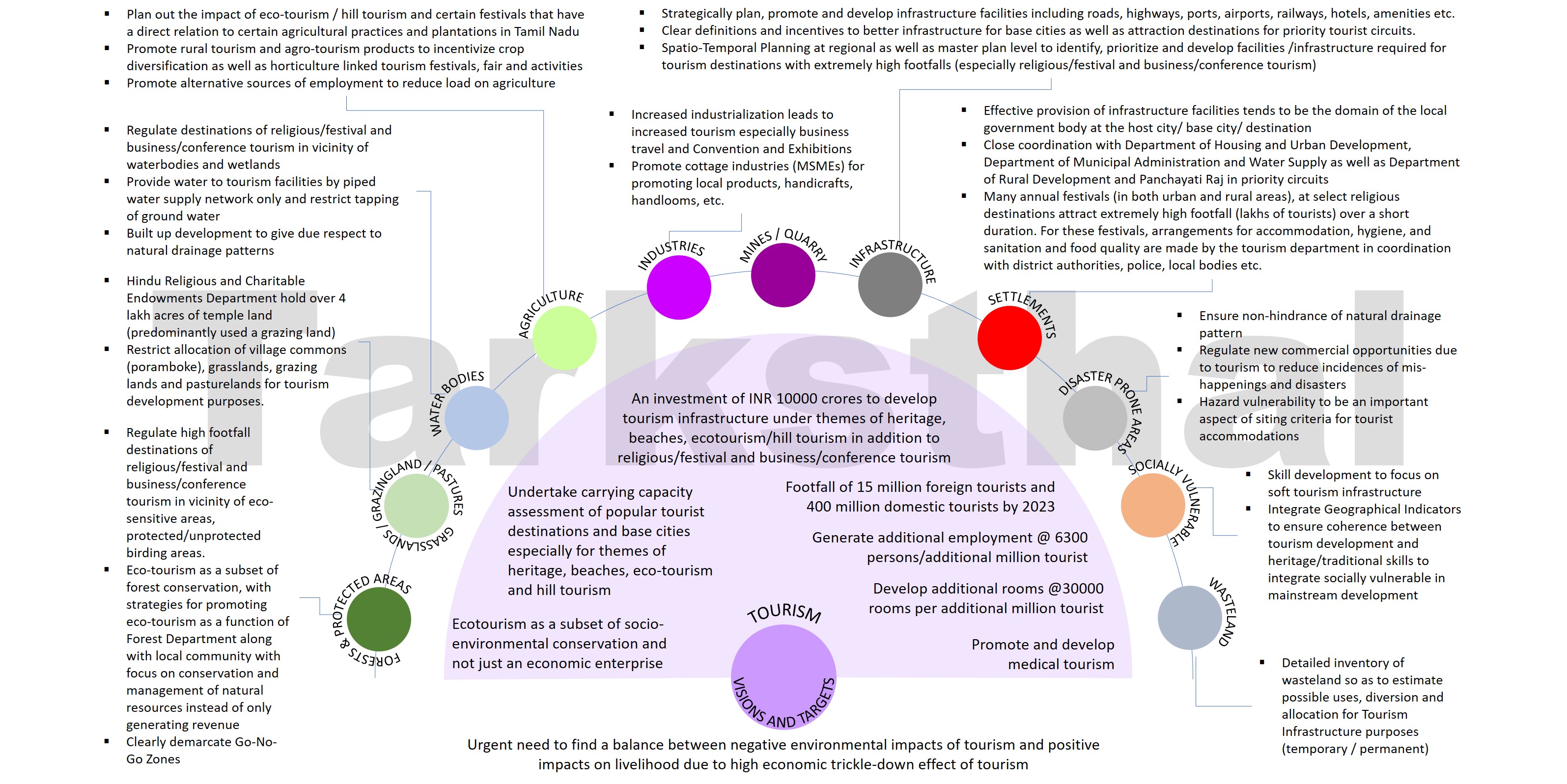
Outcomes of Thematic Consultations – Tourism 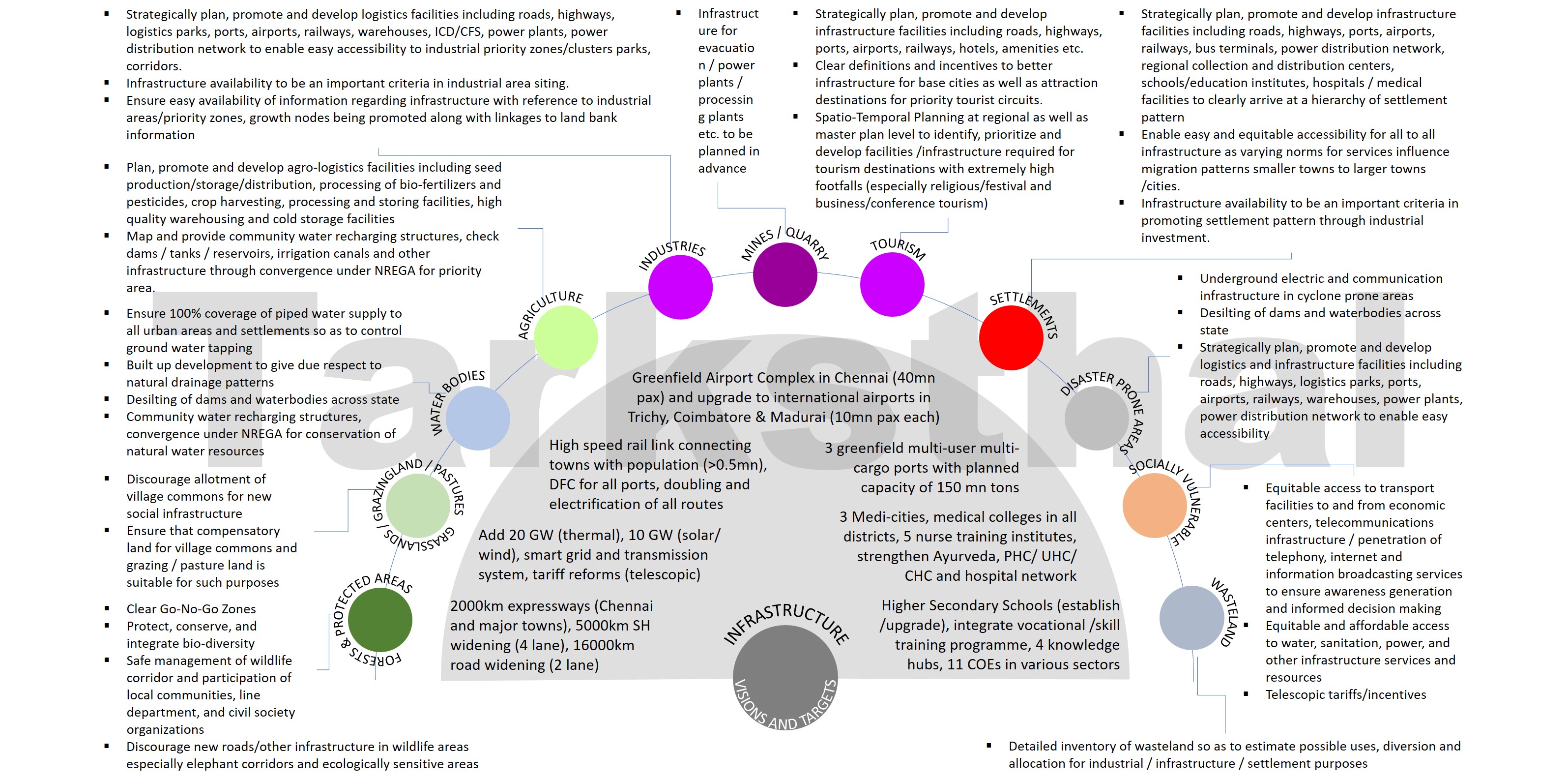
Outcomes of Thematic Consultations – Infrastructure 
Outcomes of Thematic Consultations – Settlements 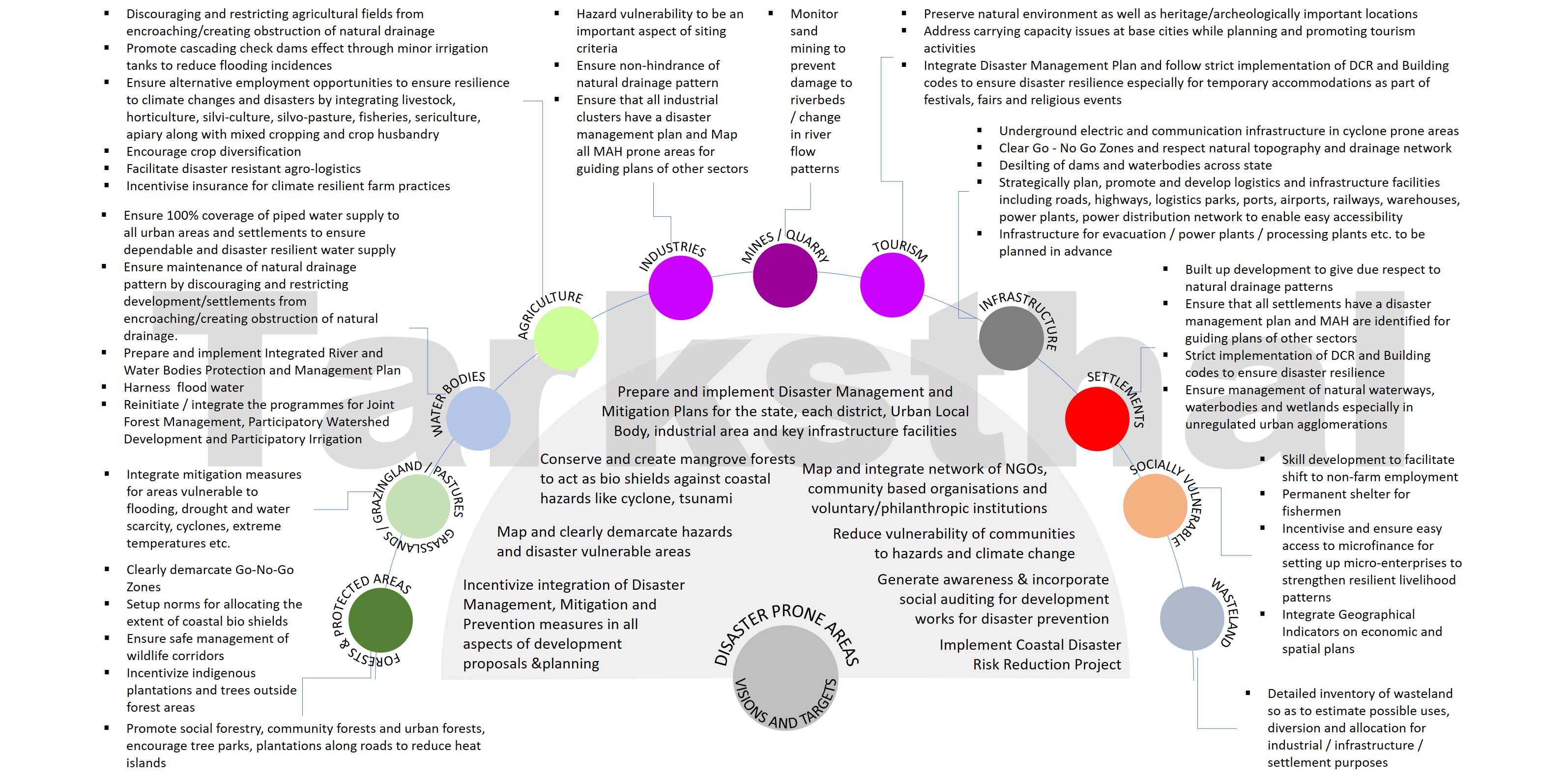
Outcomes of Thematic Consultations – Disaster Prone Areas 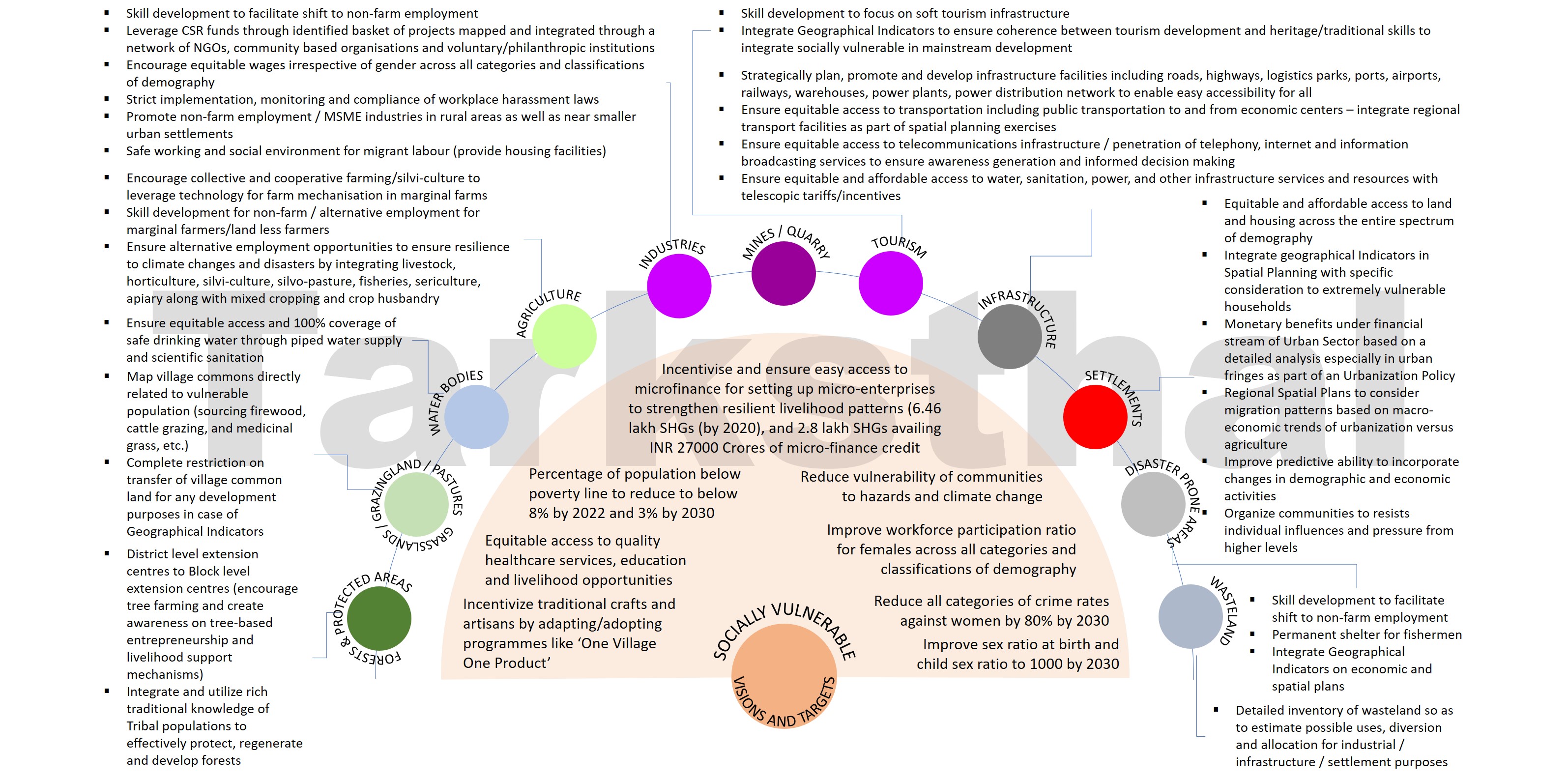
Outcomes of Thematic Consultations – Socially Vulnerable
Whoa!! It has been two years since we started. We have collected so much of information that I tend to get lost. It is time to spatially represent this information. Abstraction and visualisation are the key. Let us read on to identify key challenges and represent them spatially. Click here.
 tarksthal - तर्कस्थल
One thought on “Chapter 13: Thematic Consultations”