Category Archives: Land Use Planning and Management

Chapter 09: Land Use Statistics

What is the land utilisation pattern in India? Let us have a look and understand the sources of information for some key categories. This chapter is part of a series on Hierarchical Spatial Planning Framework

This chapter is specific to Indian scenario. Still, some sections might be relevant to other regions and countries as well.

Various ministries and departments at the National as well as the State Government maintain information on existing land use statistics for their own planning purposes. It is important to understand how these statistics look together at various levels of governance. Such a collation of land use statistics and envisaged/proposed plans is expected to give an interesting insight into the land use scenario for the state as well as the challenges ahead.

Continue reading Chapter 09: Land Use Statistics

Chapter 10: Sectoral Policies and the Land Acquisition Process

Ever wondered what various sectoral policies point to? Indian states have such a complex governance system and so many policies, let us look at a select few for two states in India (one highly urbanised and the other being one of the least urbanised). We will also understand the steps if somebody wants to have access to land to setup a project. There are links to policy details. Some may find it boring. Some may be extremely interested. Mind it. This chapter is part of a series on Hierarchical Spatial Planning Framework

The presence of complex governance systems with multiple sectoral departments means that each departments is in-charge of various development measures. It is highly likely that each department has specific policies or other forms of guiding documents for planning interventions. Some of these policies/guiding documents are expected to directly have an impact on land use, whereas some of them would result in planning processes that affect eventual land use (indirect impact on land use). As most of the departments have such policies in force and decisions are made abiding by these documents, it is important to understand and consider them during the formulation of the land use planning policy for any state or country.

Continue reading Chapter 10: Sectoral Policies and the Land Acquisition Process

Chapter 11: Department versus Land Use Theme Matrix

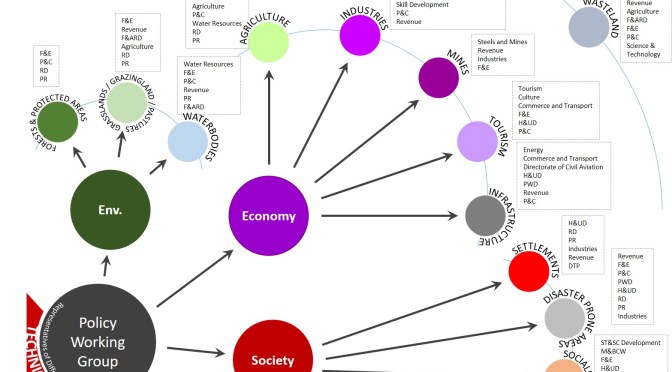
Ever wondered? Which department has what control and relationship with each land use category? Let us have a look. This chapter is part of a series on Hierarchical Spatial Planning Framework

The presence of a complex governance system with multiple sectoral departments and the complex substructure of each indicates that different departments have different mandates functions and powers as far as land use and utilisation is concerned. Whereas some department may have powers and functions covering financial, planning, influencing land use outcomes, other departments may only be affected by decisions of other departments. Furthermore, the powers and functions vested with a department or the lack thereof, may or may not be restricted to a certain category of land use. Hence, it is important to evaluate the roles of various department’s vis. – a – vis. each category of land use.

Continue reading Chapter 11: Department versus Land Use Theme Matrix
Chapter 01: Why are we discussing this?

A humorous learning process using various images, cartoons, and graphics circulating around on internet (of course I did not make any of these). This chapter is part of a series on Hierarchical Spatial Planning Framework

Have you ever come across following cartoons, graphics and images on the internet? They just pop up on google search as related images. (Of course, I did not make any of these).

Continue reading Chapter 01: Why are we discussing this?

Chapter 12: Working Group – Why and How?

This is where we bring all the departments together. We setup the working group and define the agenda for each theme. This chapter is part of a series on Hierarchical Spatial Planning Framework

Whoa… We have come a long way. We have spent close to 15 months to come so far.

We are now aware and in agreement with the need of Hierarchical Spatial and Land Use Planning (Click here). We also agree on the significance of a state land use planning policy (Click here and here). We have also seen the importance of Cooperation strategy and the approach that we can adopt for preparing such a policy. (Click here).

Continue reading Chapter 12: Working Group – Why and How?

Chapter 02: What is Land Use Planning and Management?

Construction of the concept of Land Use Planning and Management. This chapter lays emphasis on benefits of visualisation. This chapter is part of a series on Hierarchical Spatial Planning Framework

Land use planning and management is a complex word. It needs to be constructed step by step to create a better understanding.

Continue reading Chapter 02: What is Land Use Planning and Management?

Chapter 13: Thematic Consultations

After setting the working group let us prepare and undertake the thematic consultations. We also document and extract outputs and outcomes from them in terms of visions and land use interaction matrix with an example. This chapter is part of a series on Hierarchical Spatial Planning Framework

We are nearing completion of month 18 now. It has been three months since we are sensitising every stakeholder department on their role and ownership for the policy. Fortunately, they all agree and are on board. Hopefully, we also have a formal government notification circulated to at core as well as extended working group members.

In short, we have already set up the working group. First battle won.

Continue reading Chapter 13: Thematic Consultations

Chapter 03: Flight to Urbanisation

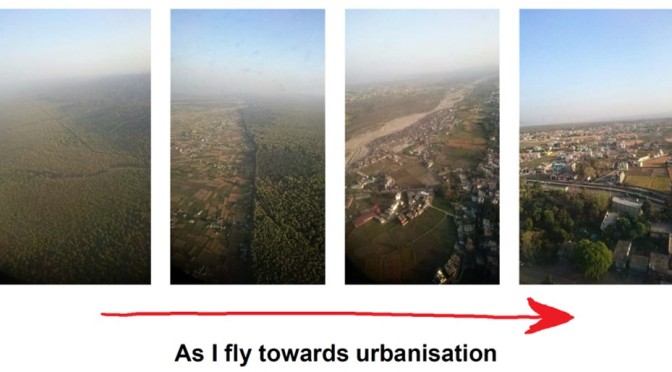
Book a window seat, board the plane to take the flight to urbanisation. You will see the land uses change below you. The birds eye view is the perfect introduction to the concept of levels of plans and scales. This chapter is part of a series on Hierarchical Spatial Planning Framework

Have you ever flown in an aircraft? If yes, which seat do you take, the window or an aisle? Personally, I always prefer the window seat. Not because of the lesser disturbance (that is an added advantage). But more because I really like to see the birds eye view of the changing land use and land cover. Especially during take-off and landings. Morning, noon, afternoon, evenings, or night. Does not matter. I just love the view. And yes, I call it ‘the flight to urbanisation’

Continue reading Chapter 03: Flight to Urbanisation

Chapter 14: Spatial Representations of Key Challenges

We are now well into the details for each sector. We have so much information on land use change and sectoral challenges. Let us spatially represent them and use the power of visualisation. We do this with two examples. This chapter is part of a series on Hierarchical Spatial Planning Framework

We have been working for the past 24 months now and undertaken an extensive study of our state. We have looked at the baseline scenario in terms of governance structure, department roles and their mandates, we have developed a good understanding of Land uses and its statistics for our state, we have also analysed the policies and strategies in detail.

Continue reading Chapter 14: Spatial Representations of Key Challenges

Chapter 04: Why Land Use Planning Policy?

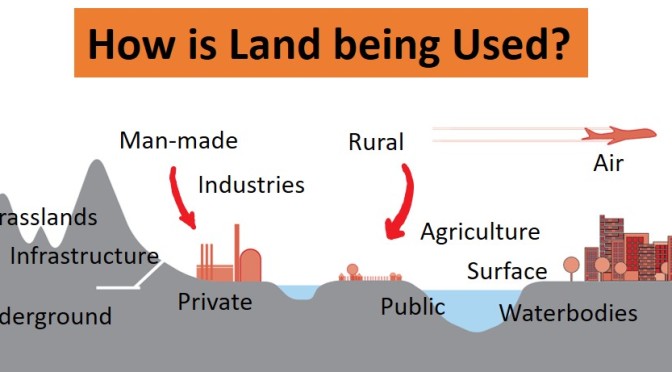
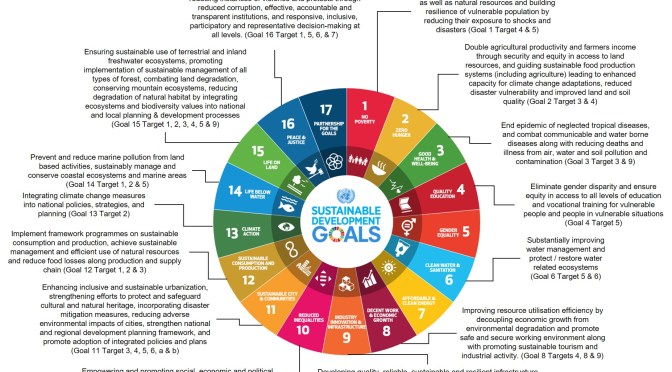
Visualise how land is being used globally, and the sectoral significance in terms forests, water, agriculture, settlements etc. We also look at how Constitution of India deals with Land and introduce ourselves to the relationship of spatial planning with different public policies. This chapter is part of a series on Hierarchical Spatial Planning Framework

“Climate change, population growth, rapid urbanisation, food insecurity and water scarcity – have increased competition for resources and heightened tensions and instability.”

António Guterres, Secretary General of the United Nations, while taking oath in 2017
Continue reading Chapter 04: Why Land Use Planning Policy?